The short answer is simple: use a Suica, PASMO, or another compatible IC card and do not spend your trip trying to memorize which company operates each line.
JR East, Tokyo Metro, and Toei Subway are separate operators. They have different fares and different day passes. But for an ordinary ride, the same IC card works across all three. Tap in, tap out, and the correct fare is deducted automatically.
If two sensible routes differ by only a small amount, choose the one with fewer transfers, less walking, or a shorter travel time. Saving a few dozen yen is rarely worth a longer or more confusing journey.
The main exception is a day spent almost entirely on the subway. If you expect to make several rides on both Tokyo Metro and Toei Subway, a pass covering both networks can be useful. It is less helpful when your day also depends on JR or private railways.
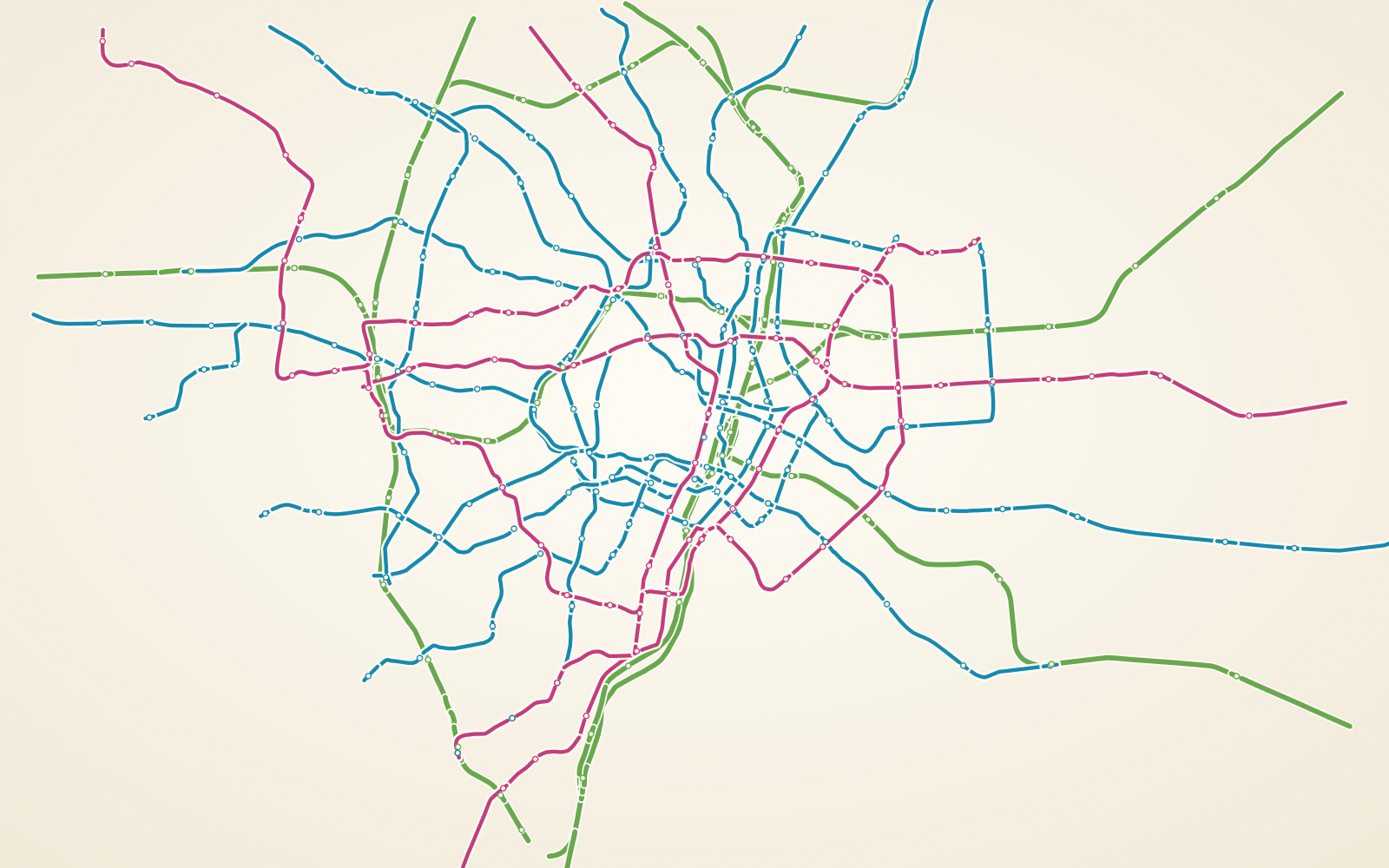
The route image above shows JR East in green, Tokyo Metro in blue, and Toei Subway in pink. It is an original geographic rendering based on 2025 railway data from Japan’s Ministry of Land, Infrastructure, Transport and Tourism under CC BY 4.0. It shows network complexity and is not a navigation map.
JR, Tokyo Metro, and Toei Subway at a glance
| Operator | What it is useful for | Familiar lines | IC cards | Main limitation |
|---|---|---|---|---|
| JR East | Major districts, suburban trips, and connections to longer-distance trains | Yamanote, Chuo, Sobu, Keihin-Tohoku | Yes | Subway-only passes do not cover JR |
| Tokyo Metro | Frequent travel across central Tokyo | Ginza, Marunouchi, Hibiya, and six other lines | Yes | A Tokyo Metro-only pass does not cover Toei Subway |
| Toei Subway | Four additional subway lines that fill important gaps | Asakusa, Mita, Shinjuku, Oedo | Yes | It is a separate operator from Tokyo Metro |
There is only one rule most visitors need to remember: an IC card works on all three, but a pass may not.
What is each network useful for?
JR East connects major districts and serves trips beyond central Tokyo
JR East is not a subway operator. In Tokyo, its urban lines connect major stations such as Tokyo, Shinjuku, Shibuya, Ikebukuro, Ueno, and Shinagawa.
Visitors often use the Yamanote Line to move between major districts and the Chuo or Sobu lines to cross the city. JR also matters when traveling farther to places such as Yokohama, Kamakura, or Omiya, or when connecting to a limited express or Shinkansen.
Tokyo Metro has nine subway lines across the city center
Tokyo Metro operates the Ginza, Marunouchi, Hibiya, Tozai, Chiyoda, Yurakucho, Hanzomon, Namboku, and Fukutoshin lines.
Its network is particularly useful for places that are not directly served by JR, including many parts of Ginza, Asakusa, Roppongi, Omotesando, and the area around the Imperial Palace. It also provides another way to reach major districts such as Shibuya, Shinjuku, Ikebukuro, and Ueno.
Toei Subway is a separate four-line subway network
Toei Subway is operated by the Bureau of Transportation of the Tokyo Metropolitan Government. Its four lines are the Asakusa, Mita, Shinjuku, and Oedo lines.
The Asakusa Line serves areas including Asakusa, Higashi-ginza, Shimbashi, and Daimon. Some trains continue onto the Keikyu network toward Haneda Airport. The Oedo Line links useful stops including Shinjuku, Roppongi, Tsukijishijo, Ryogoku, and Ueno-okachimachi.
Tokyo Metro and Toei trains may look like one subway system on a combined map, but they remain separate operators with separate fares and ticket products.
When does the difference actually matter?
An IC card handles ordinary fares across all three
Suica, PASMO, and other compatible transport IC cards work on JR East, Tokyo Metro, and Toei Subway. Use the same card to enter and exit, and the fare is calculated from the route and operators used.
When a journey qualifies for the transfer fare between Tokyo Metro and Toei Subway, the adult fare is reduced by ¥70. The discount is applied automatically when you use an IC card, so there is no form to complete and no need to visit a ticket office.
This is why most visitors do not need to decide, ride by ride, whether JR or a subway company is “better.” Check a route-planning app and compare the options by travel time, number of transfers, and walking distance from the final station.
The same station name does not always mean an easy transfer
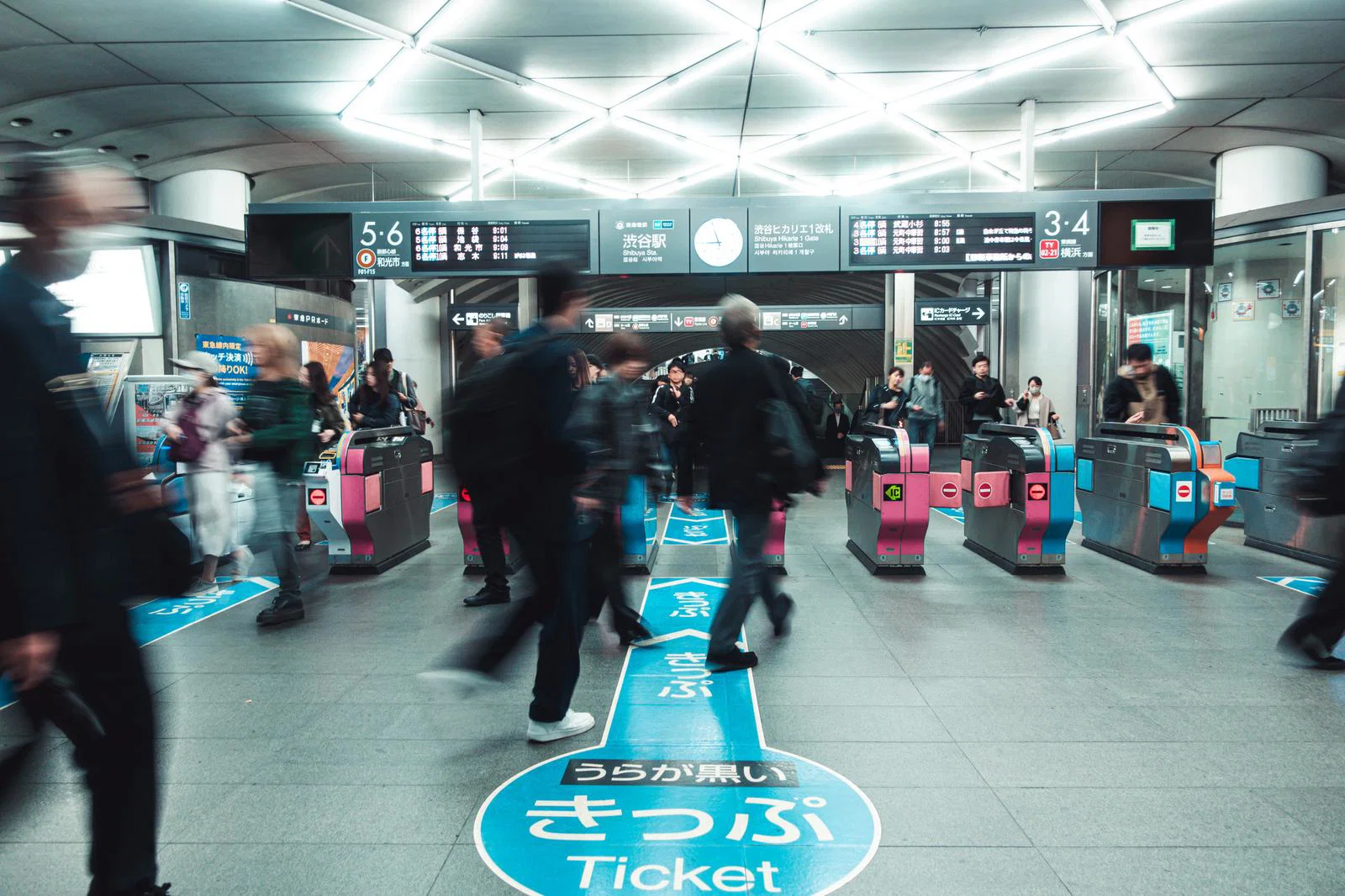
Two lines can use the same station name while having separate gates, long underground passages, or platforms that take several minutes to reach. Some transfers require you to leave one set of gates and enter another.
For a traveler, the physical transfer can matter more than a small fare difference. With luggage, children, or a rush-hour crowd, a route with one simple transfer can be better than the absolute cheapest option.
A train can continue onto another company’s line
Several Tokyo subway lines have through services with private railways. You may remain on the same train even after it enters another operator’s network and a different fare applies.
An IC card normally handles this without any action from you. A subway pass, however, only covers the operators printed in its conditions. If the train continues beyond the covered network, you must pay for the additional section.
When is a Tokyo Metro and Toei Subway pass useful?
Use an IC card for an ordinary mixed sightseeing day
If your day combines JR and subway rides—for example, Ueno, Asakusa, Shibuya, and Shinjuku—an IC card is usually the simplest choice.
Making a pass pay off means checking that every planned ride is covered and sometimes choosing a less direct route. When the difference is small, the planning effort and extra travel time can be worth more than the fare saved.
If a route app shows two reasonable options, prioritize the route that is faster, involves fewer transfers, or leaves you closer to the attraction. Treat a small fare difference as the last deciding factor, not the first.
Consider a combined pass for a subway-heavy day
A combined subway pass becomes useful when you plan to make several rides in one day around places such as Ginza, Asakusa, Tsukiji, Roppongi, or Kiyosumi-shirakawa and expect to use both Tokyo Metro and Toei Subway.
The Tokyo Subway Ticket covers every Tokyo Metro and Toei Subway line. For foreign visitors, purchase eligibility is limited to people entering Japan with Temporary Visitor status. When buying it in Japan, you must show your original passport with proof of that status; a copy is not accepted. Current adult prices are:
| Ticket | Validity | Adult price |
|---|---|---|
| Tokyo Subway 24-hour Ticket | 24 hours; start time depends on ticket format | ¥1,000 |
| Tokyo Subway 48-hour Ticket | 48 hours; start time depends on ticket format | ¥1,500 |
| Tokyo Subway 72-hour Ticket | 72 hours; start time depends on ticket format | ¥2,000 |
The regular Common One-day Ticket for Tokyo Metro and Toei Subway costs ¥1,100 for an adult and is valid from the first train to the last train on the selected calendar day. It is sold at ticket machines in Metro and Toei stations.
For an eligible visitor, the 24-hour Tokyo Subway Ticket costs less than the calendar-day combined pass and provides a full 24-hour validity period instead of ending with the last train that night. The exact starting point differs among paper, IC, and QR versions, so check the conditions of the format you buy. Purchase channels also differ, and some online sales are intended for people buying before arrival.
There are also ¥700 single-operator options: the Tokyo Metro 24-hour Ticket and the Toei 1Day Pass. These can make sense when a day’s route stays almost entirely with one operator. Most visitors do not need to design their sightseeing around that distinction in advance.
Do not force a subway pass onto a JR or private-railway day
A subway pass will not cover a JR ride around the Yamanote Line, a JR day trip to Kamakura, or a private-railway journey outside its stated coverage.
Do not take a slower subway route simply to avoid paying a separate JR fare. Use your IC card and buy a separate ticket only when a limited express, Shinkansen, or a destination-specific pass requires one.
The QR version adds friction when you continue onto another operator
Since March 25, 2026, the combined Metro–Toei pass and Tokyo Subway Ticket have been available in QR-code form.
The QR service is limited to Tokyo Metro and Toei Subway. If you continue from either subway network onto JR or another private railway, you must exit at the connecting station and enter again using an IC card or a ticket valid for the other operator. The same rule applies in the opposite direction.
Some boundary stations do not have QR readers. At those stations, you may need to contact staff and scan a QR code displayed by the employee or near the intercom. A screenshot or printed copy is not accepted, and a dead phone can mean buying another ticket until the screen works again.
This is manageable on a subway-only day. On an itinerary with through trains or frequent changes to JR and private railways, an IC card can be considerably simpler.
How to choose a route in Tokyo
When a route app presents several options, compare them in this order:
- Does the arrival station have an exit close to your destination?
- How many transfers are required?
- What is the total travel time?
- Will the station walk be manageable with your luggage?
- Is the route covered by a pass you already have?
- How large is the fare difference?
The cheapest route is not automatically the best route. If saving a few dozen yen adds another transfer or a long underground walk, keep the simpler journey.
Bottom line
JR East, Tokyo Metro, and Toei Subway are separate operators, but you do not need to memorize their boundaries for normal Tokyo sightseeing.
Use one compatible IC card and let your route app find the practical options. Put transfers, walking, and travel time ahead of a small fare difference.
Only spend time comparing passes when you know the day will be subway-heavy. For visitors with Temporary Visitor status who will use both subway operators, the Tokyo Subway Ticket is a straightforward combined option to compare. For a day involving JR, private railways, an airport route, or a trip beyond central Tokyo, the IC-card default is usually easier.